The ExPat Returneth

Wednesday, January 25, 2012

Celebrating Lunar New Year with Osechi Ryori

Our Chinese New Year tree:
a melting pot original
Our kids are adopted from China. We use their heritage to make our own melting pot, adjusting their culture to what personally fits in our family. Now they've lived in Japan. Sprinkle that into the pot. We stayed ten days in a rented house in Loire, France (shouldn't really count, but WTH, it's France, after all). My kids now eat crepes almost every weekend. Toss that experience in. We're also Catholic, so we add in all the fun feast days. 


By our rights we get noodles on Chinese New Year, King Cake on Fat Tuesday, Chirashizushi on Japanese Girls' Day, and wine and cheese whenever we feel like it. 


Our beautiful hostess in
her "working" kimono.
Thank you, Char!
We will celebrate anybody's feast days, particularly if it involves food. The kiddos have yet to meet a country's cuisine that they haven't found edible. 


Last weekend we went to a belated New Year's party given by a Japanese host. Japan celebrates the New Year on January 1. It felt somewhat ironic to celebrate it just days before Chinese New Year. However, a party is a party. And a Japanese New Year Party at Chinese New Year makes it even more fun.


For all the years we lived in Japan, we never tried Osechi Ryori, traditional Japanese New Year food.  These are dishes families only eat at the New Year, kind of like Thanksgiving for Americans. They are prepared days ahead because it's considered bad luck to cook on New Year's Day. (I love traditions that allow people to relax on the holiday). Norecipes.com has some beautiful pictures and explanations of different Osechi Ryori fare. JustHungry also has a more personal explanation of New Year's food.


Osechi Ryori
I was a little hesitant to try. In my experience, the more brown and plain the meal, the better it tastes. The more beautiful... Well, my eyes aren't eating, my mouth is. But I'm a culinary philistine. Osechi Ryori is pretty, colorful, and surprisingly delicious. Of course, all the dishes have symbolic meaning for good health, fortune, etc. in the New Year. None of the Japanese families gathered could remember which one meant what. And anyway, we all just wanted to eat and drink.


On the menu (center in the picture): Kuromame, black beans simmered in soy sauce and sugar. Our hostess added gold flakes which drew my kids to the beans like magpies. Datemaki, are the yellow, ridged foods tucked in among the bowls. They taste like egg sushi, sweet and savory, and ours had shrimp in them. Really yummy. One bowl held sugared beans (sweet and dry at the same time). One bowl holds tiny roasted fish. Another holds a shredded daikon and carrot vinegar salad. The bowl with the dark brown food is a simmered salmon dish.


Sushi dish
Moving down the table we also had simmered winter vegetables and a sushi (vinegared rice) dish topped with egg, hand smoked salmon, and simmered soy mushrooms. These were the first courses. We drank beer and ate and talked while our lovely hostess prepared the next course.


I secretly unbuttoned my pants and accepted the first round of cold sake.


Gyoza, gone before I
could take a picture
Next up, homemade gyoza. These are dumplings (potstickers) and one of our family's all-time favorite foods. These are a Japanese dish taken from Chinese cuisine. In Japan they are typically cooked in a hot pan until crispy, then steamed until fully cooked. My six year old ate nine. Our hostess made about 60. No leftovers.


Cooking nabe tableside
I leaned back in my chair and accepted sparkling plum wine while everyone else moved on to hot sake. Our hostess brought a portable stove to the table and zipped back to the kitchen. The crowd sucked in their breath. She reappeared with a nabe pot, a clay tureen used for cooking soups and stews. Everyone clapped. 


At that point, I gave in to the discomfort of the over-sated. And tried the hot sake. 


Nabe is a broth-based "hot pot." Generally you find cabbage, green onion, tofu, pork, and mushrooms in it, but you can also make it with beef (sukiyaki style), chicken, and other vegetables. Our nabe was made with a soy, mirin, and dashi (fish) broth with cabbage, green onion, giant slices of pork, and enoki mushrooms. Very healthy, very filling.


But we weren't done. 


Ramen noodles added
to the nabe--this is not
Cup O'Noodle people!
After the pork and vegetables were gone, ramen noodles were added to the pot (our six year old left an engrossing movie to run to the table and steal my noodle bowl). By that time, high grade tequila and whiskey had arrived at the table. Hot sake still flowed. Bottles of water appeared. Ramen disappeared like magic.


Finally the table was cleared except for final snacks: individual packages of flavored peanuts, dried squid and senbe rice crackers. The kids devoured candy and gummies. Insatiable, they attacked the dried snacks. 


We had eaten for four hours without stopping.  Oh my goodness, it was incredible. 


No recipe today. I'm too exhausted from eating. 


Bring on your feast days! 

Sunday, January 22, 2012

I Ain't Got No Home: The Returnee's Lament


Clarence “Frogman” Henry said it best. As a returning expat from Japan, I have moved on to other digs, back to the U.S., but still a strange land. What am I to do with all the experiences, wonderful and frustrating, that I had for 5 years of observation and assimilation into another culture? Do I forget them? No one here cares to listen to my stories. Do I scrapbook them? Seems impersonal and simplistic. Do I relive them? Can’t do that here, Japanese restaurants are few and far between. No, it’s time to re-assimilate into a whole other culture, make new friends, and start over.

Moving to Charleston, SC seemed like a good idea at the time. After all, I grew up in the southeast, Atlanta to be precise, and now live within driving distance of my family. So why do I feel like I don’t belong here?

But I want to, I need to, I HAVE TO.

My indescribable time in Japan has taught me that there’s something to be said about finding your “niche”, a place where you feel at home, wrapped in a blanket of belonging, a place where you can relax and breathe life in deeply. Who would guess that place would be in a foreign land, a topsy turvy world, a place where everything is opposite from what I have learned to be “normal.” But indeed it was “home.” I can’t explain how a southern girl, turned west coast Seattle-ite, can find peace and acceptance in a place so alien. But I did, and frankly, I miss it like hell.

So now I am plagued with questions like how to transition from a place where everyone knows your name and is always glad you came to…a place where although you share the same values, appearance, interests as those all around you, they don't take notice of you or care to get to know you? How do I make friends?


So what have I done to connect and find friends in this new place? Well I know that to find a friend, the first step is to BE a friend. I go to church. I join bible studies. I pray a lot. I found a newcomers group and participate in their activities. But I still find that there are no connections with 350 members. I don’t know why. Maybe those who have not experienced the challenges and excitement of expat life, are not as “hungry” to develop real relationships.

The Crowder family in Japan
Expats know that “time” is a very limited thing. We know that our “time” will soon be over. I wish that everyone would live their daily life knowing that their “time” in this place is limited and will soon be over and to therefore take every chance to form lasting friendships with those people whom God puts in their lives. The model Iman was once asked what the secret of her beauty and fashion was, she said, “I wake up and live every day as if it is my last”.

Expats know how to live their lives this way. I am blessed because of my experience. Whereas I used to say “home is where I hang my hat”, now I know that “home is where I open my heart”.


Cheryl Crowder has just returned to the U.S. from Nagoya, Japan, where her husband was on assignment for the past 5 years with Boeing. Originally from Atlanta, GA, she moved to Seattle in 1981 to begin a new life out west. She has had several careers that took her from city life to farm life and considers herself adaptable to any living situation. She and her husband of 28 years are now beginning a new journey in Charleston, SC with their teenage daughter, dog, and 2 cats.

Wednesday, January 18, 2012

"Quick & Dirty" Nikujaga: Japanese Meat and Potatoes


Last night's Nikujaga.
My potatoes should be soy sauce colored.
I failed but it still tasted good.
Who doesn't love a savory dish of simmered meat and potatoes when the weather gets cold and blustery? (Aside for vegetarians, vegans and the anti-potato folk).  This is another family standard that makes everyone happy and reminds us of Japan. Folks that aren't familiar with Japanese home cooking may be surprised by this dish. Any "meat and potatoes" person can eat eat this meal without fear of funkiness you may think is typical of Japanese cooking. 


No raw fish. No seaweed. No squid guts. 


Just potatoes, meat, and onion in a savory broth served with rice. Carrots, green beans, peas or other vegetables can be added. I use carrots and green beans because that's what the Hoffman kids prefer.


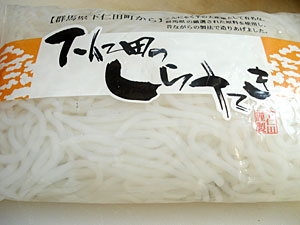
If you want something a little funkier, you can add shirataki noodles (also called konnyaku, made from the devil's tongue plant) to this dish. JustHungry.com has a great post on these "miracle" noodles that are zero-calorie and a filling additive to a lot of Japanese dishes. Shirataki may not appeal to less adventurous eaters because of their wobbly consistency and their strong smell before cooking (you have to parboil them before adding to a dish. Add at same time as the potatoes). My kids like them, but they like noodles in any form.


(Seriously, the smell out of the bag will put you off. Hold your breath and parboil those suckers! Yes they're a health nut's superfood, but incredibly stinky before boiling.)


NikuJaga
This dish can be made from thinly sliced pork or beef. Pork is more popular in Eastern Japan and beef in the west. To make with beef: substitute beef for pork, chop carrots into .25" chunks, reduce sugar to 3 Tb, mirin to 1/3 c., and 1/3 c. light soy sauce instead of regular. I add the carrots at the same time as the onions.


Thin sliced beef
Potatoes in soy mixture
4 potatoes, quartered
1 onion, sliced
1 small carrot, julienned
1/2 lb. (8 oz.) thinly sliced pork (you can find this in Asian stores or ask a butcher to slice some loin 1/16")
3 c. water
5 Tb. sugar
1/2 c. mirin
1/2 c. soy sauce
handful of 1" cut green beans (you can also use peas or snow peas)


1. Soak the potatoes in cold water and chop the sliced pork into bite-sized pieces. 


2. Bring the potatoes, water, sugar, mirin and soy sauce to a boil. Blanche the green vegetable at the same time, then set aside.


Adding meat and onions.
3. When the potatoes boil, bring them to a simmer. Add the meat and onions and simmer for about 20 minutes until the potatoes are soft and soy-sauce colored.


4. Add the carrots. Cook 2-3 minutes longer if you like the carrots soft or take off the heat and sit in the liquid a few minutes if you like them al dente. 


5. There will be a lot of liquid. Serve the pork-potato mixture in the broth, but it's not soup, so use your own discretion on how much broth you want. Ladle into a bowl and scatter with the green beans.


Our family likes Nikujaga on top of rice (which is more like another meat dish), but that's not traditional. 


6. Rice on the side. But whatever. It's your house.


Sunday, January 15, 2012

It's The Little (Cute) Things We Miss


Now that my Kuerig is costing me mucho dinero for each little cup, I decided to go old-school and use one of those little Kuerig make-your-own-coffee-blend filters. Which helped me to remember that my dear hubby had brought a gift of coffee back from his last visit to Japan. 
"Score," said I. 

I hadn't investigated the coffee gift (still in it's lovely wrapping since his visit last November), but I could bet the coffee would be pre-ground. The open coffee bag in my freezer was whole bean and because I'm lazy, I would rather rip open a beautiful gift box of coffee than take the five minutes to grind my own beans.

Moving on with this story...

What I discovered upon ripping open said box of coffee, was individually wrapped (because it is Japanese) packages of single cup drip coffee filters. I unzipped a pack, thinking I could probably dump the grounds into the Kuerig thingamajiggy.

I pulled out the filter. It was adorable. And functional. My heart ached in homesickness for Japan. 

I immediately flipped out the handles and fixed them on my coffee cup. Sort of. I was using an American cup and of course it was too big, so had to hold down one handle with my finger. I should have broken out my Japanese Mister Donut coffee cup, but I'm impatient as well as lazy. My Zojirushi water heater was ready to go (who can live without instant hot water once you've experienced it?) and I proceeded to make my tiny cup of coffee.
I had to take pictures. The filter looked like a little purse. Kawaii! And, by the way, the coffee. was. delicious.

If I were still in Japan, I would not have marveled at the technology of this little coffee filter. When you're living there, you become blase to all the practical cuteness. Then you move back to the States (or wherever, but I can only speak for the U.S.) and you become accustomed to the commodious size of everything. 

I wonder if Gulliver had these kinds of flashbacks?

Question to the expat returnees: What cute, little device do you miss? (I know you've got them!)

Friday, January 13, 2012

The ExPat Returneth: We're Number Nine!

The ExPat Returneth: We're Number Nine!: Happy Friday with a quick news note. The ExPat Returneth was listed in The Displaced Nation's Top Ten List of ExPat and Travel Posts on Spir...

We're Number Nine!

Happy Friday with a quick news note. The ExPat Returneth was listed in The Displaced Nation's Top Ten List of ExPat and Travel Posts on Spiritual Escapes. 


As the holidays draw to a close and a new calendar year commences,many of us find ourselves desperately in need of some “me” time — a chance to reassess our “to do” lists and decide which of our life goals deserves top priority....Having tracked this topic on social media for several weeks, I would like to share my top 10 findings as further food for meditation, so to speak… My hope is that these writers can help us disentangle our thoughts — which might otherwise come to resemble advanced yoga positions — on the best techniques for getting in touch with the innermost core of our beings.


Never thought of Japanese cooking as a spiritual escape, but glad The Displaced Nation did! Check out their Top Ten list here. I loved their comment about my use of "Quick and Dirty" with Japanese cooking. Maybe I should have qualified that remark as "My way of cooking Japanese food.";-)


Please check out The Displaced Nation for information on globe trotting, living overseas, food, fiction and interesting points of view by expats all over the world. Fascinating stuff.

Wednesday, January 11, 2012

Okonomiyaki: The Pancake That Isn't a Pancake

The quickest way to wax nostalgic is through the stomach. 

Yakisoba--stir fried noodles sometimes put in Hiroshimayaki
At least for us. Which is why we started cooking Japanese food. We continue to cook it because most of the home-cooking dishes are simple, affordable and delicious. And fun. Grilling or cooking your own food at a restaurant is popular in Japan. Our kids especially loved these restaurants. One of their favorite things to cook was okonomiyaki, which translates as "cook how you like." It looks like a giant pancake, but the flavors are savory not sweet. And like all good Japanese food, it tastes great with beer.


Okonomiyaki covered with
 (top to bottom):
Katsuobushi flakes,
mayo,
Aonori (seaweed),
 and okonomiyaki sauce.
Don't let the toppings scare you away!
Remember cook how you like!
As you can decipher from the translation, you can cook okonomiyaki with a variety of ingredients and differences in cooking technique. There is regional pride in different styles of okonomiyaki. Our friend from Hiroshima swears by Hiroshimayaki style and voluntarily cooked it at our house for our edification. Tokyo and Osaka have their own variations in cooking.

Bento.com has a great okonomiyaki page with a sample menu of all the different ingredients. All okonomiyaki begins with a pancake-like batter with cabbage in it. You can take in many different directions from there. 


I stole this recipe from a wonderful site called Okonomiyaki World. Check them out for okonomiyaki information. You can also buy ingredients on this site like the flour, sauce, and Japanese mayonnaise. Good to know for all you expat returnees who miss your food and have no Asian grocer close to home.


When we make okonomiyaki at home, we use the recipe on the flour bag (DH can read Japanese). As for ingredients, we wing it. We are partial to bacon and corn, lots of sauce, and Kewpie mayo. Sometimes we toss in whatever we've got leftover in the fridge. But you know, it's okonomiyaki. Use whatever you want.


*You'll find this recipe also on the recipe page at this site.*


SIMPLE OKONOMIYAKI (thanks to Okonomiyaki World):


One popular brand of
okonomiyaki flour
Batter:
1 cup Okonomiyaki flour (found at most Asian food stores) 
or all-purpose flour (you can get fancy and add potato or yam starch to make it stickier, but regular flour will work)
2/3 cup water


Whisk flour and water together until smooth in the largest bowl you've got.


To batter stir in (but don't overmix):
2 eggs
4 cups of shredded cabbage


Other stuff you can mix in:
thinly sliced green onions (about 2 stalks)
pickled ginger (found in Asian stores)
raw shrimp in 1/2" chunks or very small shrimp
Or other foods of similar size, (check bento.com for Japanese menu choices)
You could use cooked chicken (cut into 1/2" chunks), veggies (partially cooked for thicker veg), other seafoods and meat. 


(IMHO cheese is delicious in okonomiyaki even though we were skeptical before trying it at our favorite okonomiyaki joint in Japan. Kind of a cabbagey grilled cheese.)
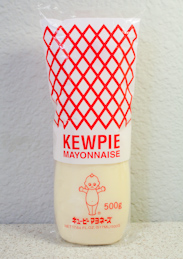
The ever popular
Kewpie Mayo


Stuff to put on the pancake while cooking:
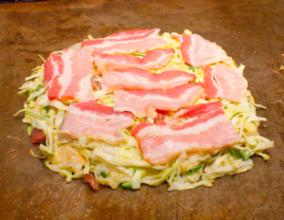
Bacon, about 6 strips cut into 3" pieces


Traditional toppings after it's cooked (best in this order):
*Sauce
Kewpie or other Japanese Mayonnaise 
(This kind of food is one of the reasons why Japanese mayo comes in a squirt bottle. It's a topper, not a sandwich condiment).
Aonori (seaweed flakes)
Katsuobushi (dried bonito flakes)


A variety of
okonomiyaki sauce.
*Once again, the toppings are your choice but it's not the same without the sauce. You can buy okonomiyaki sauce or make it.


Sauce:
3 TB ketchup
1 TB Worcestershire sauce
1 ts Soy Sauce


The technique:
Oil a griddle to about 400F (200C) and pour about 1/2 the batter into a pancake shape or all batter into 2 shapes if you've got the room. 


Flatten the pancake with a spatula to about 3/4" and about 12" wide.


Add bacon pieces to cover the top of each pancake. You can also brush on some sauce now, if you like it saucy.


After about 3 minutes, flip the pancake (bacon side down) and cook for another 4 minutes. It's tricky to flip! Don't sweat the mess. 


Brush with sauce and flip pancake again (bacon side up) and cook for another 3 minutes or until firm and well browned. 


Remove to plate and drizzle with okonomiyaki sauce. Make lovely patterns with your squirty mayo. Sprinkle with Aonori and Katusobushi (or not).


Eat it hot! It's not a reheat type of food.
Okay, it's not super healthy unless you skip the sauce, mayo, bacon, etc. But dagnabbit, it is delicious. And pretty fun!