The ExPat Returneth

Showing posts with label recipes. Show all posts

Wednesday, August 1, 2012

Japanese Summer Festivals: Obon and Grilled Corn

In Japan not a month goes by without a festival happening somewhere. This is likely true in any country of ancient origins. However, August is the true festival month because of the celebration of Obon. One of the few periods when vacations are taken from work, mid-August is the time for returning to your hometown and paying respect to your deceased ancestors (or taking a holiday to Hawaii if you are so inclined). Cemetery spots are cleaned. Lanterns are lit to guide the spirits home. Special gift boxes of household products are sent to family.

My favorite part of Obon is Bon Odori, the Obon dance. Neighborhoods celebrate Obon with a community dance. In the evening, lanterns surround a tall stage where folk music is played by a band or by elderly women djing from a boom box. The crowd, following prescribed steps specific to each song, revolves around the stage. The simple steps reflect local history in their movements. Men, women, and children wear yukata, cotton kimono. Anyone can join in the dance. It's magical to walk along a street, catch the sound of bon music drifting from a nearby temple, and suddenly happen upon bon odori.  And the dancing is actually fun because it's easy to learn.
Gigantic multi-neighborhood bon odori
(taken at Nagoya Port Festival)

With any festival, food booths can be found. Candy apples, choco-banana (frozen, chocolate dipped bananas), fried chicken bites, and french fries are normal fare. So are takoyaki (octopus chunks cooked in a ball of pancake-like batter), yakitori (grilled chicken kabobs), yakisoba (panfried noodles with meat and vegetables), dango (grilled pounded rice balls), and yakitomorokoshi (grilled corn).

Our favorites? Yakitori. Yakitomorokoshi. Yakisoba. Dango. And chocobanana, of course. I wrote about Yakitori, the grilled chicken kabobs, in April. Today I'll cover the grilled corn, yakitomorokoshi. And we'll look at yakisoba and dango in the following weeks. These are awesome summer foods that can be eaten year round. All are simple, delicious, and fairly healthy.
Various grilled stuff at a festival

Yakitomorokoshi (Grilled corn with soy sauce and mirin).

whole corn in husks 
soy sauce
mirin

Prepare a 1:1 ratio of soy sauce and mirin, depending on the amount of corn you are grilling. About 1/4 cup of the mixture per 4 ears of corn. Boil the soy sauce and mirin until it reduces to half the amount and becomes syrupy. You can do this while grilling the corn.

You might have your own way of grilling corn, so feel free to adjust to your grilling method. The crux of this recipe takes places at the end of grilling. The recommended method is to keep the husks during grilling. Soak them for about 20 minutes to keep from burning. Grill the corn at about 400 degrees (200 c) for 20 minutes, turning them every five minutes. Let them cool, then shuck the husks.

Replace the shucked corn on the grill and brush with the soy/mirin mixture. Allow for grill marks, but remember to turn so the corn doesn't char. Grill until corn is hot and cooked through.

The soy/miring syrup is also a great mixture for yakionigiri, grilled rice balls, and to brush on other grilled vegetables. 

Any festival foods that you like to cook at home? Please share! Thanks to Julie Johnston for reminding me of this yummy recipe!


Wednesday, May 23, 2012

Okonomiyaki Japanese Pancake Reprise

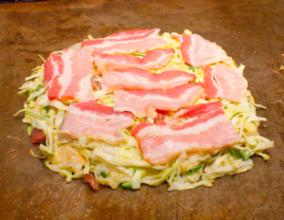
Okonomiyaki


This week is a reprise of a fun festival food that's popular in Japan in the summer: Okonomiyaki. The pancake that isn't a pancake.


The quickest way to wax nostalgic is through the stomach. 

Yakisoba--stir fried noodles sometimes put in Hiroshimayaki
At least for us. Which is why we started cooking Japanese food. We continue to cook it because most of the home-cooking dishes are simple, affordable and delicious. And fun. Grilling or cooking your own food at a restaurant is popular in Japan. Our kids especially loved these restaurants. One of their favorite things to cook was okonomiyaki, which translates as "cook how you like." It looks like a giant pancake, but the flavors are savory not sweet. And like all good Japanese food, it tastes great with beer.


Okonomiyaki covered with
 (top to bottom):
Katsuobushi flakes,
mayo,
Aonori (seaweed),
 and okonomiyaki sauce.
Don't let the toppings scare you away!
Remember cook how you like!
As you can decipher from the translation, you can cook okonomiyaki with a variety of ingredients and differences in cooking technique. There is regional pride in different styles of okonomiyaki. Our friend from Hiroshima swears by Hiroshimayaki style and voluntarily cooked it at our house for our edification. Tokyo and Osaka have their own variations in cooking.

Bento.com has a great okonomiyaki page with a sample menu of all the different ingredients. All okonomiyaki begins with a pancake-like batter with cabbage in it. You can take in many different directions from there. 


I stole this recipe from a wonderful site called Okonomiyaki World. Check them out for okonomiyaki information. You can also buy ingredients on this site like the flour, sauce, and Japanese mayonnaise. Good to know for all you expat returnees who miss your food and have no Asian grocer close to home.


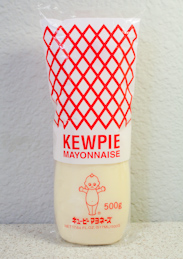
When we make okonomiyaki at home, we use the recipe on the flour bag (DH can read Japanese). As for ingredients, we wing it. We are partial to bacon and corn, lots of sauce, and Kewpie mayo. Sometimes we toss in whatever we've got leftover in the fridge. But you know, it's okonomiyaki. Use whatever you want.


*You'll find this recipe also on the recipe page at this site.*


SIMPLE OKONOMIYAKI (thanks to Okonomiyaki World):


One popular brand of
okonomiyaki flour
Batter:
1 cup Okonomiyaki flour (found at most Asian food stores) 
or all-purpose flour (you can get fancy and add potato or yam starch to make it stickier, but regular flour will work)
2/3 cup water


Whisk flour and water together until smooth in the largest bowl you've got.


To batter stir in (but don't overmix):
2 eggs
4 cups of shredded cabbage


Other stuff you can mix in:
thinly sliced green onions (about 2 stalks)
pickled ginger (found in Asian stores)
raw shrimp in 1/2" chunks or very small shrimp
Or other foods of similar size, (check bento.com for Japanese menu choices)
You could use cooked chicken (cut into 1/2" chunks), veggies (partially cooked for thicker veg), other seafoods and meat. 


(IMHO cheese is delicious in okonomiyaki even though we were skeptical before trying it at our favorite okonomiyaki joint in Japan. Kind of a cabbagey grilled cheese.)
The ever popular
Kewpie Mayo


Stuff to put on the pancake while cooking:
Bacon, about 6 strips cut into 3" pieces


Traditional toppings after it's cooked (best in this order):
*Sauce
Kewpie or other Japanese Mayonnaise 
(This kind of food is one of the reasons why Japanese mayo comes in a squirt bottle. It's a topper, not a sandwich condiment).
Aonori (seaweed flakes)
Katsuobushi (dried bonito flakes)


A variety of
okonomiyaki sauce.
*Once again, the toppings are your choice but it's not the same without the sauce. You can buy okonomiyaki sauce or make it.


Sauce:
3 TB ketchup
1 TB Worcestershire sauce
1 ts Soy Sauce


The technique:
Oil a griddle to about 400F (200C) and pour about 1/2 the batter into a pancake shape or all batter into 2 shapes if you've got the room. 


Flatten the pancake with a spatula to about 3/4" and about 12" wide.


Add bacon pieces to cover the top of each pancake. You can also brush on some sauce now, if you like it saucy.


After about 3 minutes, flip the pancake (bacon side down) and cook for another 4 minutes. It's tricky to flip! Don't sweat the mess. 


Brush with sauce and flip pancake again (bacon side up) and cook for another 3 minutes or until firm and well browned. 


Remove to plate and drizzle with okonomiyaki sauce. Make lovely patterns with your squirty mayo. Sprinkle with Aonori and Katusobushi (or not).


Eat it hot! It's not a reheat type of food.
Okay, it's not super healthy unless you skip the sauce, mayo, bacon, etc. But dagnabbit, it is delicious. And pretty fun!


What festival foods were popular in your host country


Tuesday, April 17, 2012

Quick & Easy Taco Rice -- Japan via Okinawa -- Your Family's New Favorite Meal

I was going to write something pithy this week, but I'm not feeling the pithy vibe. I don't feel like cooking, cleaning, or anything house related. I'm almost finished with a first draft of another novel and all I want to do is write (except for my Pinterest and Facebook addictions).
Beautifully simple Taco Rice


So this week we are having Takoraisu: Taco Rice. I could make Taco Rice every week, and my family would happily kiss the rice cooker. We love Taco Rice so, so much. And you will, too, if you like tacos and rice. And since we're talking Japanese food, I don't mean octopus (tako in Japanese). 


But tacos and rice, you say? How can it be that easy? It can. It's not even saffron rice. Just plain ol' short-grained rice. But you can do the long grained thing if you're into that. 


Taco Rice is brilliant, brilliant, brilliant. The tasty dish hails from Okinawa. Presumably American marines brought it to the islands, combining the beloved American taco with the beloved Okinawan rice. Another reason to love the US troops.


Here's our little Taco Rice story. While living in Japan, our family happened on a restaurant called Yummy. (There are always restaurants named something like Yummy in Japan. It's how Japan works). Yummy served a variety of Okinawan and Hawaiian style food in a sort of fast food type setting. 
Yummy's Bible
I like their style
Eldest daughter scanned the menu hanging on the wall. "I want taco rice." 


"Remember, you don't like octopus," I said. "You said it tastes like erasers." 


"No, look," she replied, pointing to the picture of a bowl with something like tortilla chips, cheese, and salsa spilling over the rim. (In Japan, there are always pictures or plastic replicas of food at restaurants. Very handy).


We bought her taco rice because we are obliging parents and eldest daughter always eats well.


Of course, we tried her taco rice and loved it. And she will forever remind us that we are indebted to her for introducing taco rice to our family. 


Tasty Kitchen also has a post on Takoraisu with beautiful pictures. I took Yummy's idea and made it my way.


Taco Rice


Hot cooked rice
Your favorite taco ingredients minus the tortillas or taco shells
Add your favorite taco ingredients on top of the hot cooked rice


How simple is that? 


More specifically:
I usually make 2 go of rice in my rice cooker, which equals about 1 1/2 cups of uncooked rice. Make the amount of rice you normally use for a side dish.


Cooking the meat, onions
and seasoning
1 lb. of ground meat (turkey, beef, &/or pork)
chopped onion
taco seasoning


Cook the chopped onion and meat. Drain the fat. Add the taco seasoning as directed on the package.


Your favorite taco condiments (for example):
Adding the taco meat on top of the rice
salsa
shredded cheese
sour cream
guacamole
sliced olives

chopped tomato
chopped lettuce
tortilla chips


Put whatever you like on top of the rice. It's not rocket science. 
Which is why I love Taco Rice. 
Enjoy! Salud! Kampai!


Wednesday, March 7, 2012

Quick & Easy Japanese Food: Mabodofu (Tofu & Ground Meat)

MABODOFU: HAVE YOUR MEAT AND EAT TOFU, TOO


Today I present a tofu dish, another Japanese dish brought over from China and Japanified. Mabodofu (dofu = tofu) is a common meal at home and in Chinese restaurants. According to legend (and Wikipedia), a Japanese chef made mabodofu popular at the first Sichuanese restaurant in Tokyo in the 1950s. In China, it's made with spicy chili bean paste. In Japan, the recipe was modified for the milder Japanese palette. It's so common now in Japan, you can buy the Hamburger Helper equivalent in a grocery store (which is pretty good). It is one of the few dishes that our youngest will pick over noodles, which is a startling revelation if you knew her.


See all the meat? If you're vegetarian,
use a ground Bocca Burger type product
Yet, it's tofu and I know what you're thinking. It's tofu. 


Listen, my family likes tofu, but I was raised in a Midwestern farm town where we ate meat every day. If you offered me a choice between grilled steak and grilled tofu, I would choose the steak. I am not here to convince you to hang out in the tofu aisles of Whole Foods. Mabodofu is not even a vegetarian dish, generally it includes ground pork (although you can use ground beef or other ground meats). It has a rich gravy, which gives the tofu a savory flavor. And you use firm tofu which has enough bite and texture that it feels creamy without being squishy. 


Believe me, I do not like squishy.


A Mabodofu mix
bought in an Asain grocery
in the U.S.
First, the Hamburger Helper way. Here's a picture of a package of Mabodofu mix. You can get them in Asian grocery stores at different heat levels. (Mild has absolutely no heat). This is super simple. All you need is about a quarter pound of ground pork, a package of tofu, and green onions (you can actually leave the green onions out). Make some rice, saute the pork, add the sauce and cubed tofu, and you are done. Aside from the rice, it takes about 10 minutes. 


I know. 10 minutes. I'd double the recipe for an American family, though. It will cost you about $6 for two packages.


I cut & drain my tofu, but notice
my lack of style. No squeezing necessary.
For those of you who would like more control over the contents of your meal (the mix probably has MSG), JustBento.com has a great recipe. I've looked at other recipes and theirs is the simplest I've found so far. My family loved it. The ingredients are also pretty easy to find: tofu, ground meat, onions, miso paste (the soybean paste in miso soup), garlic, ginger, crushed red pepper, soy sauce, sesame oil, sugar, and water.


Go here for the JustBento.com recipe for Mabodofu.


Miso paste from U.S. Asian
grocery
I had never had onions in Mabodofu before, but they added extra flavor and texture. Sarah, the blogger who created this recipe, also used ground beef. Traditionally, the meat is ground pork, and I used ground pork when I made it. I also like the addition of miso. What's missing is the Chinese chili paste you normally see in Mabo recipes. The miso is used as sweet bean paste. 


I would NOT use a tablespoon of cayenne pepper unless you are a heat freak. I used a dash, which is plenty for my family's timid tastebuds. Sichuan Mabo Tofu is spicy, so let your tastebuds make your decision.