 |
| Zaru Soba |
So I make them Zaru Soba, cold soba buckwheat noodles, and everyone's happy. It's simple and fast (yay for me) and satisfies the little foodies. Win-win.
In Japan, this is a common summer lunch dish, although you could eat it for dinner, too. Hot soba noodles in a soup is also a common dish and can be accompanied with tempura, mountain vegetables, deep-fried tofu, and other ingredients. We'll save that for cooler weather.
Cold noodles sounded a bit strange to me the first time I tried them (although we do eat noodle salads in the US), but I was immediately hooked. The soy sauce based dipping sauce is tangy and refreshing, the buckwheat taste of the noodles earthy and smooth. Really delicious.
 |
| Noodle Soup Base |
 |
| Soup Base proportions |
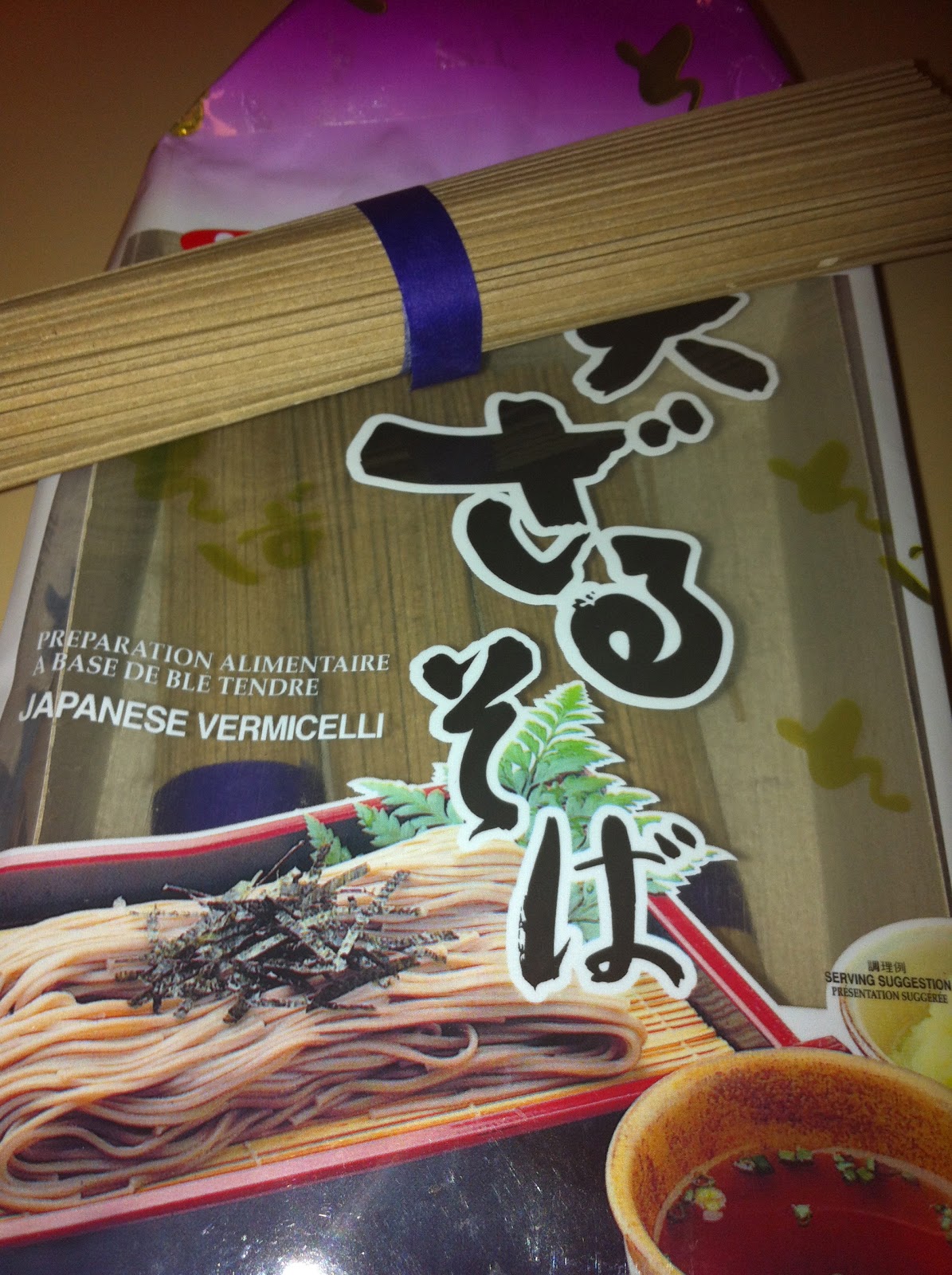 |
| Soba bundle and Soba package |
Prepare Zaru Soba sauce the easy way above (1 cup cold water to 1 Tb of soup base) or the hard way (see JustHungry.com).
1 bundle of Soba (buckwheat) Noodles
Boiling Water (no salt, no oil, just water)
Condiments to sprinkle on the noodles
(suggestions to follow)
Soba generally come in packs with the dried noodles tied in bundles. One bundle makes enough for one person, depending on the gusto of the eater.
Bring a pot of water to boiling, add noodles, and boil for 6-7 minutes. Test for doneness. They should be firm but not hard. Rinse hot noodles in cold water (don't plunge in cold water, rinse them and run your hands through them) and allow to drain.
Actually, Zaru Soba is named for the zaru, a bamboo flat basket. It acts to drain the water from the noodles. We bought zaru dishes (at the Japanese version of the dollar store, no less), which are rimmed plates with a bamboo insert.

No 100 Yen Store close by? If you have a sushi roller, put it on top of a plate. That was my old standby. Otherwise... so your noodles sit in a small puddle. Life will go on.
 |
| Dipping the noodles |
Do you have a favorite summer dish from your host country? Please share!


